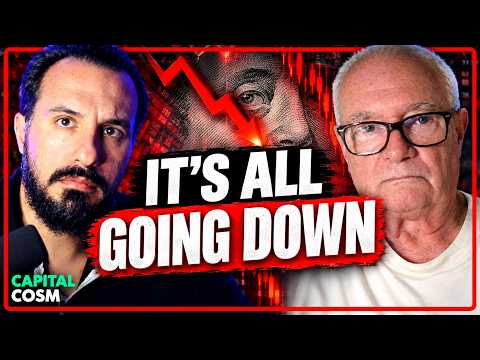
Cem Karsan Says You Can Bet On A Big Drop Without Shorting A Thing
https://www.youtube.com/watch?v=H7tnS3540aY
TLDR Predictions about market declines vary, with one speaker forecasting a drastic 25-40% drop and another suggesting a minor 2-5% fall, highlighting differing views on economic management's role in preventing crises like 2008. They stress the importance of external factors and economic indicators, while also pointing out that market vulnerabilities often surface in tough times.
Understand Market Predictions
Before making any financial decisions, it is crucial to evaluate the differing predictions surrounding market declines. One expert suggests a significant 25% to 40% drop, while another views a more modest reduction of 2% to 5% as more realistic. Taking the time to analyze these forecasts can inform your investment strategy. Consider the underlying reasons for these predictions, such as economic management and intervention by authorities, as they can shape market behavior.
Monitor Economic Indicators
To make informed investment decisions, keep an eye on key economic indicators such as bond yields, currency fluctuations, and oil prices. These metrics serve as vital signs of market health and can provide insights into potential future movements. For instance, changes in yields may signal shifts in investor sentiment or economic stability. Regularly reviewing these indicators helps you stay ahead of market dynamics and prepare for potential volatility.
Acknowledge External Factors
It's essential to recognize that various external factors, including geopolitical events and pandemics, can significantly impact market behavior. While economic authorities strive to manage these influences, their control is not absolute. For instance, past crises have illustrated how unforeseen events can trigger substantial market declines. By acknowledging these factors, you can develop more robust investment strategies that account for uncertainty.
Embrace Asymmetric Market Opportunities
Consider exploring asymmetric market opportunities, which may offer low risks paired with high potential returns. Options trading, for example, can be a viable strategy in unstable markets. By utilizing options, investors might hedge against losses while also capitalizing on potential recoveries. This approach allows for flexibility in your investment portfolio and can lead to significant gains even in challenging market conditions.
Reflect on Historical Events
Learning from historical market events can provide valuable insights into current market dynamics. For instance, discussions surrounding past crises, like the 2008 financial collapse or significant market shifts on days like Liberation Day, help contextualize present concerns. Utilize these reflections to gauge market sentiment and prepare your investment strategy accordingly. Understanding history can equip you to make more resilient financial decisions.
What are the predictions about market declines discussed in the transcript?
One speaker predicts a significant decline of 25% to 40%, while the other suggests a smaller drop of 2% to 5% is more likely.
What factors are considered key indicators of market behavior?
The bond market and currencies are discussed as key indicators of market behavior.
How do the speakers view the role of economic authorities in managing market declines?
The first speaker argues that markets are heavily managed and authorities will intervene to prevent drastic drops, while the second speaker believes the intervention may not be enough to prevent a market crisis similar to 2008.
What external factors do the speakers agree could affect market drops?
They agree that external factors such as pandemics or geopolitical events could affect market drops.
What does Jim Carzon emphasize about market dynamics during stable and challenging times?
Jim Carzon emphasizes that during stable times, everyone appears successful, but individual vulnerabilities are revealed when challenges arise.
What does Carzon say about predicting market declines and asymmetric market opportunities?
Carzon asserts that a prediction of a 25-40% market decline in the next nine months is bold and encourages not to disregard asymmetric market opportunities, highlighting that options trading can involve low risks with high potential returns.
 🔴 Are Russia & China Secretly Pulling The String...
 Elon Take The Wheel Livestream: Alex Gibney, Direct...
 I Asked 7 Top AI Models How to Escape the 9–5......
 Mac Mini For AI Agents: How Much Memory You Need, A...
 My Jev Pi Durable Agent CURATES News: HYPE, FACT, o...
 The Only Carnivore Snack You’ll Ever Need...