Summaries > Miscellaneous > Plan > /wayfinder: Nothing is too big to plan anymore...
/Wayfinder: Nothing Is Too Big To Plan Anymore
https://www.youtube.com/watch?v=F3lL98Pj90o
TLDR Wayfinder is a new planning tool that enhances project management by facilitating ambitious planning across multiple sessions, organizing tasks into manageable 'tickets,' and enabling users to create prototypes while keeping track of decisions. It streamlines workflows and addresses issues in traditional planning methods, promoting flexibility and incremental development even for complex projects.
Define Your Destination
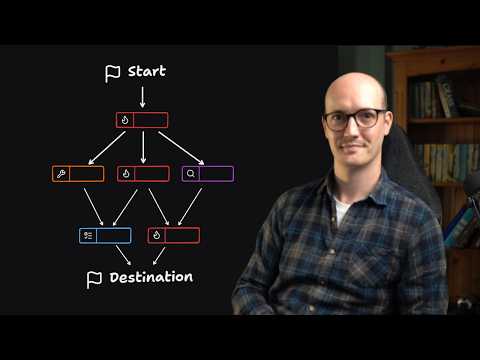
Before starting a Wayfinder session, take the time to clearly define your ultimate goal or destination. This initial step sets the foundation for your entire planning process, providing a clear benchmark for what you aim to achieve. Having a well-defined objective not only clarifies your priorities but also helps in identifying relevant tasks or 'tickets' that need to be created. By knowing your destination, you can steer your project in the right direction and make proactive decisions throughout the planning phase.
Break Down Tasks into Tickets
Once your destination is established, utilize the Wayfinder tool to break down the project into manageable tasks, known as tickets. This segmentation of work allows you to tackle complex projects in smaller, more achievable parts. Each ticket serves a specific purpose, whether it's for research, prototyping, or actionable items in the real world. This structured approach not only enhances productivity but also makes it easier to track progress and make adjustments as required during the project lifecycle.
Utilize Sub-agents for Prototyping
One of the key features of Wayfinder is the ability to delegate tasks to sub-agents, particularly for the prototyping phase. This prevents the trap of excessive upfront low-fidelity planning, which can hinder creativity and flexibility. By using sub-agents, you can generate prototypes that allow for iterative feedback and refinements. This agile approach is vital in modern project management, as it fosters adaptability and encourages spontaneous innovation while minimizing risks associated with rigid planning methods.
Establish Relationships Between Tickets
To improve organization and project flow, establish blocking relationships between your tickets. This critical step involves identifying dependencies among tasks, ensuring that certain subtasks must be completed before others can begin. By creating these relationships, Wayfinder enables continuous assessment of decision-making throughout your project. This not only enhances clarity but also helps in swiftly addressing issues or bottlenecks that may arise as you work towards your destination.
Iterate and Adapt Your Specs
In the Wayfinder method, specs should be viewed as temporary destinations rather than permanent fixtures. This agile perspective allows users to iterate on their specifications based on real-time progress and findings. By adapting specs as decisions are made, you keep the project aligned with its goals and encourage an ongoing engagement with the work being done. This flexibility is crucial in complex projects, as it accommodates evolving insights and changing priorities without derailing overall progress.
What is Wayfinder?
Wayfinder is a new planning approach that allows for more ambitious work planning across multiple sessions, handling dependent decisions and parallel planning without the constraints of traditional tools.
How does Wayfinder support project planning?
Wayfinder helps with planning and executing complex projects by creating a comprehensive map of tasks needed to reach a destination, managing tickets, and organizing research, prototyping, and grilling sessions.
What are tickets in the context of Wayfinder?
Tickets are individual tasks managed by Wayfinder, which can include various types such as research, grilling sessions for discussions, and real-world action tasks.
How does Wayfinder handle decision-making?
Wayfinder establishes blocking relationships between tickets, allowing for continuous assessment of decision-making as the project progresses and generating specifications from the completed task map.
What feedback has Wayfinder received from users?
Users have described successful outcomes with Wayfinder, with some even creating their own tools to complement it, highlighting its effectiveness in organizing work and managing projects.
Is Wayfinder suitable for non-coding tasks?
Yes, Wayfinder is flexible and can be used for both coding and non-coding tasks, such as planning a garden office.
What issues does Wayfinder address compared to previous methods like Grill with Docs?
Wayfinder addresses common issues by linking decisions to the original source and treating specs as temporary destinations for large tasks over multiple sessions, focusing on implementing decisions rather than maintaining persistent specs.
 Use This to STEAL all the Best GitHub Repos (Claude...
 The AI Resistance is Forming...
 How I manage 15 AI agents 24/7 as a solo founder | ...
 The 7 Steps to a Profitable Trading System | Ariel ...
 /wayfinder: Nothing is too big to plan anymore...
 The Pi Coding Agent: The ONLY REAL Claude Code COMP...